Peacebuilding
Hand in Hand's Bilingual Schools
A network of schools where Jewish and Arab children learn in Hebrew and Arabic together. How Hand in Hand built a model under pressure.
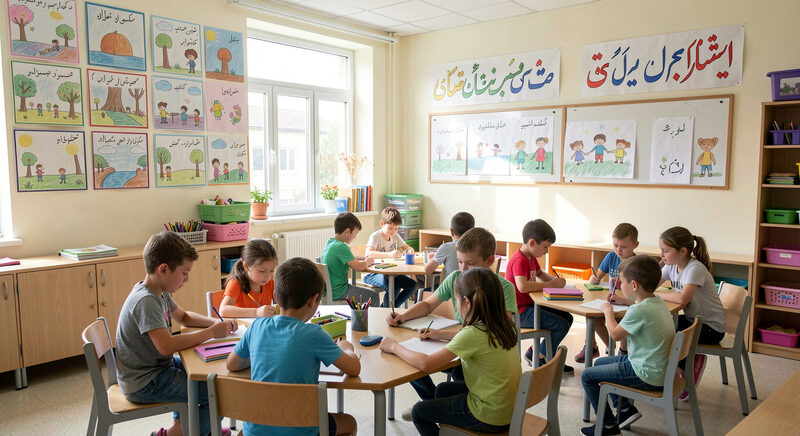
Hand in Hand operates a network of public schools in Israel where Jewish and Arab children study together in both Hebrew and Arabic. Founded in 1997 with its first schools opening in 1998, it is the largest documented attempt at integrated bilingual education inside Israel and the clearest test of whether shared daily life can be organised rather than merely encouraged. This profile records the model, its growth and the pressure it has survived.
How the schools began
The network was founded by educators who argued that Israel's school system, which teaches Jewish and Arab children in separate schools in their own languages, manufactures the separation the conflict then hardens. The first schools opened in 1998 in the Galilee and in Jerusalem, beginning with a few dozen pupils. The model spread over the following two decades to additional cities, including Wadi Ara, Jaffa and Haifa, and the network now runs a small number of accredited public schools, each pairing Jewish and Arab pupils from the surrounding area. The schools sit inside the state system rather than beside it: they are publicly recognised and partially state-funded, with the network raising the additional money the bilingual model requires, roughly the cost of the second teacher in every classroom.
What a school day sounds like
The documented detail outsiders notice first is acoustic: a Hand in Hand classroom runs in two registers at once, the teacher's instruction in one language and its echo in the other, and pupils drift between the two depending on which friend they are talking to. The network reports that demand exceeds places at several campuses, with waiting lists on both the Jewish and the Arab sides, and that hiring is its hardest task, since a co-teaching pair needs two qualified teachers who can also work as one.
What the bilingual model looks like in practice
Each classroom is co-taught by two teachers, one working in Hebrew and one in Arabic, and every child studies both languages rather than their own alone. The curriculum adds shared calendar work: the schools mark Israeli Memorial Day and the Palestinian commemoration of 1948, teach both national narratives in history, and treat the religious calendars of Jewish, Muslim and Christian pupils as common property. The documented difficulty is not the theory but the weight: a six-year-old learning two alphabets, a teacher pair translating every conflict in the staff room, and parents who chose the school against the advice of their own communities.
The 2014 arson and what it showed
In November 2014, during one of the conflict's most violent periods, the Jerusalem school's first-grade classroom was set on fire at night and the walls were spray-painted with slogans against coexistence. Nobody was hurt. The documented response is the part that matters for the record: pupils returned within days, enrolment at the school rose in the following years rather than falling, and the attack became the episode outsiders cite when asking whether the model can survive pressure. The arsonists were later convicted.
What the schools can and cannot claim
The network publishes its enrolment and its graduates' paths, and outside observers have documented strong bilingual outcomes and durable cross-community friendships among alumni. What the schools cannot claim is scale: a few thousand pupils in a system of millions. Their founders' answer, recorded in interviews, is that the schools exist to prove the model works so that the state could extend it, not to replace the system by themselves. Critics from both national communities have accused the schools of producing children who belong fully to neither side; graduates interviewed in the press generally describe the opposite experience, and the May 2021 intercommunal violence, during which the schools stayed open and parents organised joint guards, is cited by the network as the model's hardest test passed.
What a graduate takes away
The network's own account of success is modest: a graduate who speaks the other community's language, has friends inside it, and cannot treat the conflict's victims as abstractions. The documented limit is the same fact reversed; a bilingual graduate still enters separate universities, separate armies or separate drafts of the national story, and the schools do not pretend otherwise.
Where it sits among the bridge-builders
Hand in Hand is the daily, institutional end of the spectrum: not a camp or a ceremony but a school day, five days a week, for thirteen years of a child's life. The short-form model is in Seeds of Peace and the Maine Camp, and the joint-organisation map is in the peacebuilding section. For the history these classrooms work inside, see Key Dates of the Conflict.